
Nationwide Concern as Centrelink Payments May Be Suspended on Police Warrants
Australia is facing a sweeping welfare reform debate after the introduction of new legislation that allows the suspension of government support for individuals with outstanding arrest warrants. The proposal, known as Schedule 5 within the Social Security and Other Legislation Amendment Bill 2025, has ignited intense national concern about fairness, due process, and the potential misuse of the new Centrelink welfare suspension powers.
The legislation would enable the Minister for Home Affairs to direct the Minister for Social Services to halt welfare payments as soon as police notify authorities that a person appears on a warrant list for a serious violent or sexual offence. Payments could be stopped immediately, without a court hearing, without a review of the warrant, and in many cases, before a person is even informed that they are under investigation.
This represents a significant policy shift, expanding the role of law enforcement within the social security framework and raising fears that innocent people could be caught in the system. Critics warn that the new Centrelink welfare suspension policy risks stripping essential income from individuals and families who may be misidentified, misunderstood, or wrongly flagged by police during high-pressure situations.
Government’s Justification: Protecting Public Safety and Integrity
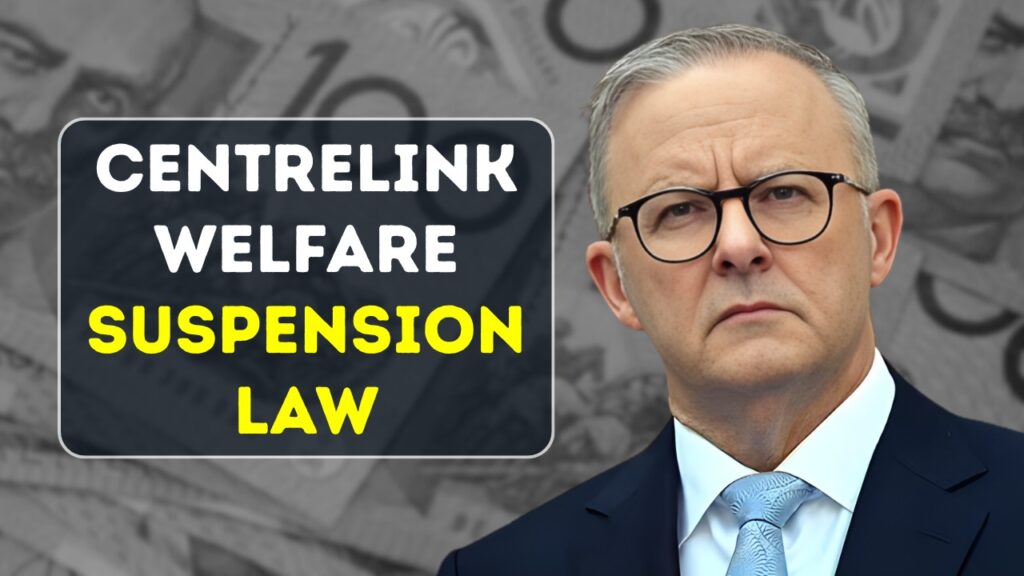
Federal ministers argue that the new Centrelink welfare suspension measure is a necessary step to ensure taxpayer funds are not funnelling into the hands of people who may be evading justice for serious crimes. The government insists the policy targets only a small, high-risk group, individuals wanted for serious violent or sexual offences, and says it aligns welfare administration with broader community safety goals.
According to officials, the welfare system must remain credible and trustworthy, especially for the millions who rely on it. They claim the measure strengthens public confidence by ensuring alleged violent offenders cannot continue receiving government support while avoiding arrest. The government maintains that those who obey the law and meet eligibility conditions will not be affected by the Centrelink welfare suspension provision.
Supporters further argue that the measure does not introduce new policing powers but instead formalises cooperation between law enforcement and social services. However, the scope and immediacy of the suspension power have stirred significant alarm.
Critics Raise Alarming Concerns About Fairness and Human Rights
Despite government assurances, the legislation has been met with strong backlash from civil society organisations, legal experts, welfare advocates, and frontline community workers. Their primary concern is that the Centrelink welfare suspension system undermines the presumption of innocence, one of Australia’s most fundamental legal principles.
Presumption of Innocence Undermined
A warrant does not establish guilt. It may result from misunderstandings, administrative errors, identity mix-ups or unverified allegations. Yet, under the new framework, a person could lose their entire income before stepping inside a courtroom. Legal experts argue that this transforms Centrelink into a punitive tool, allowing an administrative process to impose penalties traditionally reserved for judicial proceedings.
Critics warn that the Centrelink welfare suspension rule could become a form of punishment without trial, eroding public trust in both police procedures and welfare administration.
People With Disabilities at Higher Risk
Disability advocates say people with cognitive disabilities, psychosocial conditions or communication challenges already encounter higher rates of police interaction and misunderstanding. A wrongful inclusion on a warrant list could lead to immediate financial loss, putting individuals at risk of homelessness, medication shortages, mental health deterioration, and loss of independence.
For those on the Disability Support Pension, the Centrelink welfare suspension provision could have devastating, life-altering effects.
Disproportionate Impact on First Nations Australians
First Nations organisations highlight that Indigenous Australians are disproportionately represented in police databases and frequently experience misidentification or over-policing. Community leaders fear the law could widen social and economic inequality, pushing vulnerable families further into poverty and contributing to rising rates of child removal and housing insecurity.
The new Centrelink welfare suspension mechanism could deepen existing systemic disadvantages for communities already facing severe structural barriers.
Family and Domestic Violence Victims Could Be Wrongly Targeted
A major danger lies in misidentification during domestic violence incidents. It is well documented that victims are sometimes mistakenly listed as offenders during chaotic police responses. If a victim’s welfare payments are suspended under the Centrelink welfare suspension system, they may become trapped with their abuser due to financial dependence.
This could sabotage escape plans, deny access to emergency housing, and place lives at risk.
How the Suspension System Would Work in Practice
If the Bill is enacted, the Centrelink welfare suspension process would unfold as follows:
- Police identify an individual with an outstanding warrant for a serious violent or sexual offence.
- Police notify the Minister for Home Affairs.
- The Home Affairs Minister informs the Minister for Social Services.
- The Social Services Minister directs Centrelink to suspend all payments immediately.
No judicial oversight is required during these initial steps. The process can unfold rapidly, without any obligation for authorities to notify the affected person beforehand. While payments may be reinstated once the warrant is resolved, many argue this does little to prevent the severe immediate harm caused by sudden loss of income.
Human Consequences: When Payments Stop Overnight
Welfare advocates warn that losing payments, even briefly, can plunge individuals and families into crisis. Many Australians receiving Centrelink support live week-to-week, and a sudden loss of income can cause:
- missed rent
- eviction or homelessness
- electricity and gas disconnection
- inability to purchase food
- loss of essential medication
- disruption to children’s schooling
- reliance on overstretched emergency services
Single parents, people with chronic illnesses, and those with disabilities face the greatest risks. With the Centrelink welfare suspension occurring without prior notice or court approval, many affected individuals may not even know whom to contact to resolve the issue.
Community organisations fear a surge in demand for emergency relief services that are already operating at capacity.
Ethical Concerns: Should Welfare Be Used as Punishment?
The legislation raises broader philosophical and ethical questions about the purpose of social security. Welfare systems exist to provide stability, prevent hardship, and support basic living needs. Critics argue that linking welfare access to law enforcement undermines this principle, blurring the boundaries between support services and punitive systems.
Some warn that if the government normalises using welfare as an enforcement tool through the Centrelink welfare suspension framework, future expansions could become politically easier, potentially targeting broader categories of alleged offences.
This raises fears of a slippery slope toward a more punitive, surveillance-driven welfare model.
Demands for Safeguards and Accountability
Legal centres, political crossbenchers, Indigenous organisations, disability advocates and anti-poverty groups have urged the government to delay or amend Schedule 5. Their proposed safeguards include:
- requiring court oversight before suspension
- guaranteeing immediate notification to recipients
- protecting payments for dependent children
- introducing exemptions for domestic violence survivors
- creating transparent appeal mechanisms
- establishing independent oversight
Without these protections, organisations warn that the Centrelink welfare suspension system may cause widespread harm far beyond the government’s intended targets.
High Stakes for Australia’s Most Vulnerable
Australia now faces a defining moment concerning welfare, justice and public trust. The new Centrelink welfare suspension measure aims to protect communities from individuals wanted for serious crimes, but it also presents profound risks to innocent people, vulnerable groups, and families who rely on Centrelink as their sole source of security.
The debate reveals a deeper question: Should social security be a guaranteed safety net, or can it be withdrawn based on police databases rather than court rulings?
As advocacy groups continue to raise concerns, the outcome of this legislation will shape the future of welfare policy, and determine whether Australia’s social safety net remains a system of support or becomes a tool of enforcement.